Why So Many People in Pennsylvania Are Turning to Kratom — and Why It’s a Problem
 | 4.9 Google Reviews
| 4.9 Google Reviews
Peace Valley Recovery is located in Bucks County, Pennsylvania. Our mission is to provide patient-centered care that focuses on healing and recovery from addiction. This blog provides information, news, and uplifting content to help people in their recovery journey.
Authored by Chris Schumacher | Medically Reviewed by Dr. Elizabeth Drew,
Last Updated: November 4, 2025
The gas station clerk barely looks up as you reach for the small package next to the energy drinks. The label promises “natural pain relief” and “mood enhancement.” After months of struggling with withdrawal symptoms or chronic pain, this seems like finding water in a desert.
You tell yourself this is different. Legal. Sold right here next to the gum and lottery tickets.
The small green capsules seem like salvation in a bottle. For the first time in weeks, you can function again. The constant ache subsides, the anxiety quiets, and you can sleep through the night.
What you don’t realize is that you’ve just stepped into a new cycle that might be harder to break than the one you left behind.
Understanding Kratom
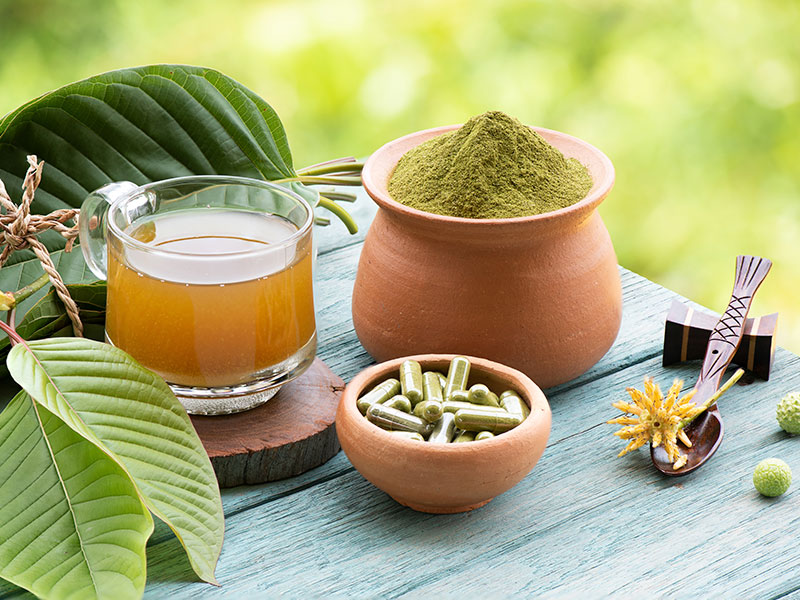
Kratom comes from the leaves of a tree native to Southeast Asia, where people have used it for centuries in traditional medicine. The plant contains compounds that can affect the same brain receptors as opioids, which explains why it can provide pain relief and euphoria.
In Pennsylvania, kratom is marketed as a natural supplement.
You’ll see it labeled as an “herbal remedy” or “botanical supplement.” Companies promote it as a safe alternative to prescription pain medications or as a tool for people trying to quit opioids. The marketing uses reassuring words like “natural,” “plant-based,” and “traditional” that suggest safety and legitimacy.
Some vendors even claim it can help with opioid withdrawal without causing dependency of its own. These claims sound appealing, especially when you’re struggling with pain or trying to break free from more dangerous substances. The idea that something natural and legal could solve your problems seems too good to pass up.
However, the reality is more complicated than the packaging suggests.
The Pennsylvania Kratom Scene
This accessibility becomes part of kratom’s appeal across Pennsylvania. Walk into almost any gas station, smoke shop, or head shop and you’ll likely find it for sale. It sits on shelves next to energy drinks and over-the-counter medications, available to anyone over 18 with cash or a credit card.
There’s no doctor’s appointment needed, no prescription to fill, no pharmacy to visit. You can buy it during your lunch break or while stopping for gas. The normalization is striking: buying kratom becomes as routine as purchasing ibuprofen or vitamins.
The transaction happens quickly, quietly, without judgment or questions.
For people who’ve experienced the stigma that often surrounds addiction or mental health treatment, this anonymity can provide relief. Store employees rarely offer information about dosage, side effects, or potential risks. The packages themselves provide little guidance beyond basic serving suggestions.
You’re essentially on your own to figure out how much to take and how often. This casual availability sends a powerful message that kratom must be safe. After all, if it were dangerous, surely it wouldn’t be sold so openly and widely.
The Hidden Trap
This sense of safety proves deceptive for people in recovery, who often discover kratom during their most vulnerable moments. Maybe prescription pain medication stopped working. Maybe they’re trying to avoid relapse on harder substances. Maybe traditional treatment options seem too expensive or intimidating.
Kratom appears to offer a middle ground. It’s legal, relatively inexpensive, and provides real relief from physical and emotional pain.
For someone whose life has been turned upside down by addiction, the promise of stability without the risks of illegal drugs can seem miraculous. The early days often reinforce this hope. Kratom can ease withdrawal symptoms, reduce anxiety, and provide enough energy to get through daily responsibilities.
Many people describe achieving “normalcy” for the first time in months or years. They can work, socialize, and function without the constant struggle that defined their recent past. But kratom has its own agenda, and the relief it provides comes with a price that becomes clear only after regular use has already begun.
Your body starts to expect it.
When you try to skip a dose, familiar symptoms return: muscle aches, nausea, irritability, and crushing fatigue. The realization that you’ve developed another dependency can be devastating. This was supposed to be the solution, not another problem.
The substance that helped you escape one trap has created a new one. Withdrawal from kratom mirrors many of the symptoms people experience when quitting opioids. The irony is cruel: the thing you used to avoid withdrawal now causes withdrawal of its own.
The Real Risks
Beyond dependency, the lack of regulation around kratom creates dangers that many users don’t anticipate. Since the FDA doesn’t oversee kratom products, there’s no guarantee of what you’re actually consuming. Studies have found kratom products contaminated with heavy metals, bacteria, and other harmful substances.
The scope of kratom use is substantial and growing. According to the Substance Abuse and Mental Health Services Administration’s National Survey on Drug Use and Health, an estimated 1.7 million Americans aged 12 and older used kratom in 2021.
Dosing becomes a guessing game.
One brand’s “moderate dose” might be another’s “high dose.” The strength can vary dramatically between products, making it easy to accidentally take too much. Some people increase their dosage over time as their tolerance builds, pushing into potentially dangerous territory.
The physical effects can be severe. Regular kratom users report liver damage, seizures, and respiratory depression. The plant affects multiple body systems, and long-term use can lead to complications that require medical intervention. In 2021, the FDA’s adverse event reporting system received 78 reports involving kratom products, with 20 deaths and 20 hospitalizations reported.
The risk increases when people mix kratom with alcohol, prescription medications, or illegal drugs, sometimes without realizing the potential for dangerous interactions. Perhaps most concerning is how kratom can interfere with genuine recovery, providing a numbing effect that prevents the emotional and psychological work necessary for lasting change.

When Legal Doesn’t Mean Safe
The legal status of kratom creates a false sense of security that proves dangerous for many users. Most people assume that if something is available for purchase, it must have been tested and deemed safe by authorities.
This assumption doesn’t apply to kratom.
Unlike prescription medications, kratom products don’t undergo rigorous testing for safety or efficacy. There are no standardized dosing guidelines, no warnings about potential interactions, and no oversight of manufacturing processes. The supplement industry operates under much looser regulations than pharmaceuticals.
Companies can make health claims without proving them, and products can reach consumers without extensive safety testing. Kratom falls into this regulatory gap, leaving users to essentially experiment on themselves. Many people discover too late that legal doesn’t mean harmless.
Alcohol and tobacco are legal too, but their potential for harm is well-documented and widely understood. Kratom’s risks are less well-known, partly because it’s relatively new to American markets and partly because research has been limited.
Getting Real Help
Breaking free from kratom dependency often requires professional support. The withdrawal symptoms can be intense enough to interfere with work, relationships, and daily functioning. Trying to quit without help frequently leads to relapse because the physical discomfort becomes overwhelming.
Medical supervision during detox can make the process safer and more comfortable.
Healthcare providers can prescribe medications to ease withdrawal symptoms and monitor for complications. Comprehensive treatment goes beyond just stopping kratom use – it addresses underlying issues like chronic pain, anxiety, depression, or trauma that may have led to kratom use initially.
The goal isn’t just to stop using kratom, but to build a life where you don’t need any substance to cope. This process takes time and support, but recovery is possible.
If you’re struggling with kratom dependency, Peace Valley Recovery can help. Call us at (267) 662-2442 or contact us online today.
You May Also Like to Read

The Reality of Mental Health Struggles Among Olympic Athletes
The Reality of Mental Health Struggles Among Olympic Athletes Imagine sprinting 82 feet down a narrow [...]